The Frozen Shore
la Costa Helada
Beyond the Wall, along the Bay of Ice and in the shadow of the Frozen Fangs, stretches a strip of ice where wildlings survive by hauling wagons pulled by packs of dogs. It is the land of the walrus men, long at odds with the clans holding the course of the Ice River.
Some of its wildlings later join the great movements of their people southward, whether under the banner of a king beyond the Wall or by crossing the border with the Night's Watch.
Chapter 1
The walrus men
Books only
The region is a vast ice sheet northwest of the Frozen Fangs, along the Bay of Ice; Lorn Point rises within it.
Its people travel in wagons built from walrus bones and pulled by packs of wild dogs, which is why they are known as the walrus men. They remain in constant conflict with the Ice River clans, who hold the northernmost stretch. There are also tales of local tribes who worship gods of ice and snow.
Chapter 2
Raiders, rangers and a wreck
Books only
In the past, the Ironborn came to rule the entire Sunset Sea from this shore to the Thenns' Gap, and more than once wildlings from the area raided Bear Island.
During the reign of Dorren Stark, the Night's Watch ranger Redwyn came here and to Lorn Point with his companions; by his own account, they fought giants and traded with the children of the forest.
From a shipwreck on this coast came the scarlet Asshai silk that, years later, a mother passed to her daughter to mend Mance Rayder's cloak, when he was still a ranger of the Night's Watch.
Chapter 3
The army that came down from the mountains
Books only
Mance Rayder, who had spent years gathering a vast army, brought the walrus men of this coast to make peace with the cannibal clans of the great ice rivers.
Joined with the rest of the wildling clans, they gathered at the source of the Milkwater, at the foot of the glacier, and from there marched down the river's course into the Haunted Forest.
Chapter 4
Tormund's truce
Books and show
 Tormund
 Jon Snow
Gallery
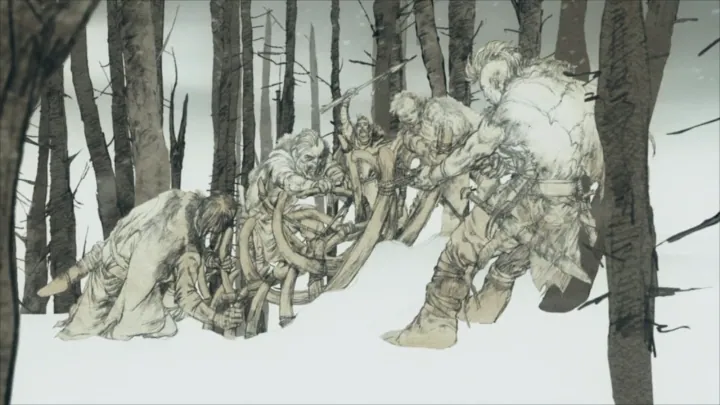
The Frozen ShoreFrozen Shore men.png · gameofthrones.fandom.com · this wiki publishes under CC-BY-SA

What we are not sure about
PositionWe worked it out
The position was inferred from the label on the base map rather than from a symbol of its own: it marks the area, not the point.