Qohor
Qohor is one of the nine Free Cities of Essos, the furthest east of them all and among the wealthiest. It owes its fame in equal parts to trade — timber, furs, tapestries, and a steel skilled enough to rival Valyrian work — and to a sinister reputation that has earned it the name City of Sorcerers.
Set at the edge of the great forest that gives it its name, it is the last stop for anyone travelling toward the Dothraki Sea and the lands beyond it.
Chapter 1
The City of Sorcerers
Books only
Qohor was raised by a band of Valyrians devoted to a dark god, the Black Goat, who settled by the forest to work its timber; that first logging camp grew, over time, into one of the Free Cities.
Rumor holds that within its walls people still practice arts long since barred elsewhere — divination, blood magic, necromancy. None of it can ever quite be proven, but the whispers are enough that even in Westeros the city is known as the City of Sorcerers. Its own god demands blood every day: usually animals, though on certain occasions criminals die under its priests' knives, and old records claim that in truly desperate times nobles have handed over their own children to appease it.
The city stands at the western edge of its own forest, on the banks of the Qhoyne, a branch of the Rhoyne, north of Volantis and east of Norvos, linked to the latter by a Valyrian road; two further roads connect it to the Rhoynar ruins of Ar Noy and, through the woods, to the vanished city of Essaria. Stone walls ring it, and its guard is made up not of ordinary soldiers but, save for a small watch, of Unsullied, each carrying a spear hung with a braid of human hair.
Chapter 2
The forest, the forges, and the caravans
Books only
Qohor's wealth comes above all from the forest around it: barges loaded with timber leave its docks every day bound for the cities of the lower Rhoyne, while its hunters supply furs and hides much prized elsewhere. Weavers and woodcarvers add to the trade — Qohorik tapestries rival those of Myr in quality at a lower price, and its markets are full of finely worked wood.
What truly sets the city apart, though, are its forges. Its weapons and armor outmatch anything tempered in the castles of Westeros, and its smiths have learned to dye steel without robbing it of shine or strength. Only here is the old art of reworking Valyrian steel by spellcraft still known, a secret jealously kept; Maester Pol, who spent years there trying to learn it, was punished more than once for prying and was finally exiled and left without a hand, convinced the magic relied on blood sacrifice.
Every caravan bound for Vaes Dothrak or the lands past the Dothraki Sea makes its last stop here to resupply, and those returning laden with eastern goods pause to trade before moving on. That constant traffic has made Qohor the most exotic of the Free Cities and one of the richest, though the city still remembers a time — before Sarnor fell — when it was ten times wealthier still.
Chapter 3
The Bloody Century
Books only
Little is known of Qohor's government before that turbulent stretch remembered as the Bloody Century. By the city's own histories, not long after the Doom struck Valyria, a dragonlord named Aurion proclaimed himself Emperor there and set out with his dragon and thirty thousand men to reclaim what was left of the old homeland; none of them ever returned.
When Volantis tried to bring the other Free Cities to heel, Qohor joined with Norvos and beat it back on the Rhoyne, burning its fleet on Lake Dagger with fireships. The two cities have counted each other as allies more than rivals ever since, though Norvos's Bearded Priests still call the Black Goat a demon.
The fall of the kingdom of Sarnor to the Dothraki struck a heavy blow to Qohor's trade, and at some point in that same century fifty thousand riders under Khal Temmo rode to its gates meaning to take the city. They broke themselves against barely three thousand Unsullied, a disaster for the Dothraki remembered ever after as the Three Thousand of Qohor.
Chapter 4
The visit of the dragons
115 ACBooks only
 Daemon Targaryen
 Laena Velaryon
In 115 AC, Prince Daemon Targaryen and his wife, Lady Laena Velaryon, reached Qohor during the tour of Essos with which they marked their marriage, flying Caraxes and Vhagar. The city greeted them with more curiosity than ceremony — Westeros and the Triarchy carried little weight there — but that did not stop all of Qohor from turning out to watch the dragons overhead.
Chapter 5
Breaking with the Golden Company
From 211 ACBooks only
Not long after 211 AC, Qohor failed to honor a contract it had made with the Golden Company. The mercenaries answered by sacking the city in payment for the debt left unpaid.
Chapter 6
The khalasar passes through
Books only
 Khal Drogo
Khal Drogo's great khalasar crossed near Qohor on its march toward Vaes Dothrak, the road any caravan or riding people must take before crossing the Dothraki Sea beyond it.
Chapter 7
Riot at the Black Goat
Books only
According to sailors docked at Los Tablones, followers of R'hllor living in Qohor had risen up within the city and tried to burn down the temple of the Black Goat.
The physical world
Otras dos carreteras le une a las ruinas de la rhoynar Ar Noy al suroeste y al este, a través del bosque, con las ruinas de la antigua ciudad libre de Essaria.
Geography · Danza de Dragones, Mapa de las Ciudades Libres.
Gallery
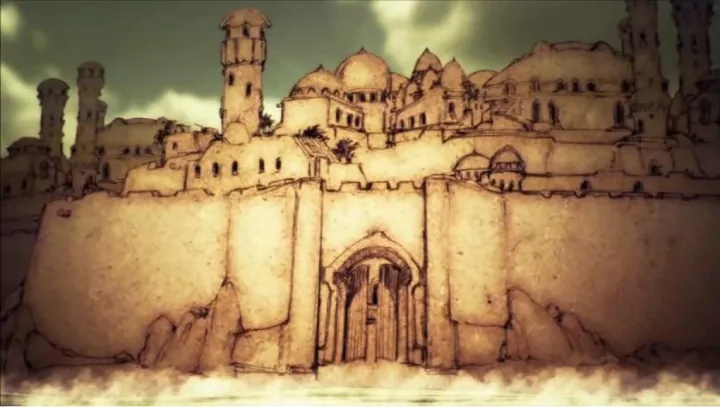
QohorQohor HBO.jpg · hieloyfuego.fandom.com · this wiki publishes under CC-BY-SA
