Valyria
For centuries Valyria was the seat from which nearly the entire eastern continent was ruled: a city of impossibly tall towers and rivers of lava, built by lords who tamed dragons, razed to nothing in a single night.
Long before that disaster, the families who would later found other lines across the sea fled its shores. Nobody rules Valyria today; anyone who sails too close to its ruins rarely comes back.
Chapter 1
The center of the world
Books only
At its height Valyria occupied a peninsula off southern Essos, washed by the Summer Sea, linked by roads to Tyria and three other cities of the Freehold. Travelers on those roads felt they were heading toward the point where everything else converged.
The city grew upward: towers so tall they vanished from sight, threaded by lava from the Fourteen Fires that the pyromancers put to use. Sphinxes lined its streets. Power was split between two rival dragonlord houses, who occasionally handed rule to an archon chosen from among them.
Beneath that wealth lay mines of gold and silver, worked by slaves captured in the wars against Ghiscar and the Rhoynar. That system held the empire together for generations — until it didn't.
Chapter 2
The dragons' flight
Books only
Valyria was the ancestral home of House Targaryen, and of the Velaryons and Celtigars too. When Daenys, daughter of Lord Aenar Targaryen, dreamed that the city would one day be destroyed, her father chose not to wait and see if she was right.
Aenar got his family to safety, along with the five dragons the house still had and whichever allied houses chose to follow, crossing the sea to Dragonstone, the island that became their new home.
Chapter 3
The Doom
102 BCBooks only
Around the year 102 before the Conquest, something devastated Valyria in a single day. Accounts speak of fire pouring from the Fourteen Fires, of the ground splitting open, of a sky turned to ash. Every soul in the city died, and the entire Freehold fell with it.
Of the empire that had ruled half the known world, no government, no army, no noble house remained to claim what was left. Only a handful of dragonlords, already far from the city when it happened, lived to tell of it.
Chapter 4
Those who went and never came back
Books only
Shortly after the catastrophe, Aurion — one of the few dragonlords left alive after the ruin — declared himself Emperor of Valyria and marched his army out to reclaim whatever still stood. Neither he nor his men were ever heard from again.
Later, the Volantene party of the Tigers sent an entire fleet to occupy the ruins; it vanished in the Smoking Sea without a trace. Tommen II Lannister, King of the Rock, tried too, drawn by riches said to still lie buried there, and met the same end.
Valyria is still said to hold Valyrian steel swords and other objects of power left over from before the ruin. No one who has gone to check has come back to confirm it.
Chapter 5
The princess who flew to Valyria
54–56 ACBooks only
 Jaehaerys I Targaryen
During the reign of Jaehaerys I Targaryen, his niece Aerea — heir to the throne before his own children were born — vanished along with Balerion, the oldest and largest dragon still living. Almost two years passed with no word of either of them.
When Aerea reappeared over King's Landing, riding a wounded Balerion, something was eating away at her from inside; she died soon after. Septon Barth came to believe the dragon had carried her to Valyria, the place where both had been born, and that the Doom had touched them there.
Chapter 6
Those who swore they'd made it
115–291 ACBooks only
 Daemon Targaryen
 Laena Velaryon
For years the story went that in 115 AC, Daemon Targaryen and Laena Velaryon flew Caraxes and Vhagar all the way to the ruins of Valyria itself, defying the Doom to see with their own eyes what was left of the old dragonlords' empire. What they actually did was simpler: they flew to the Free Cities.
Gerion Lannister really did try. He set out for Valyria in 291 AC in search of Brightroar, the Valyrian steel blade his house had lost generations before. He never returned; he is presumed to have died at sea.
Chapter 7
The braggart who brought back a dragon's egg
Books only
 Euron Greyjoy
Euron Greyjoy claimed to have done what no one else managed: reaching Valyria and coming back alive. He said that among those ruins he found the Dragonbinder horn, a dragon's egg, and other treasures no one else could claim.
No one could prove the story true or false, but it gave him more standing at the Kingsmoot than any other claimant, and he ended up crowned King of the Iron Islands on the strength of it.
The physical world
Estaba conectada a Tyria y otras tres ciudades por las Carreteras Valyrias, siendo considerada el centro del mundo conocido durante su época de esplendor.
What it is like · The Lands of Ice and Fire
En la actualidad, sus ruinas se encuentran ubicadas en una isla del Mar del Verano junto a Tyria y otra ciudad en ruinas, separada de las Tierras del Largo Verano por el Mar Humeante.
What it is like · The Lands of Ice and Fire
La ciudad estaba constituida por torres, tan altas que parecían no tener fin. La lava procedente de las Catorce Llamas discurría a través de la ciudad, siendo el combustible de los piromantes.
What it is like · Juego de Tronos, Capítulo 34, Catelyn.
Entre la decoración más común de la ciudad destacaban las esfinges.
What it is like · Juego de Tronos, Capítulo 20, Eddard.
Gallery
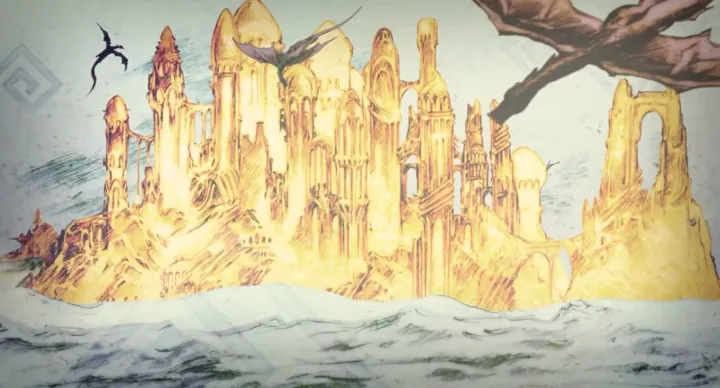
Valyria, image 1Valyria HBO.png · hieloyfuego.fandom.com · this wiki publishes under CC-BY-SA 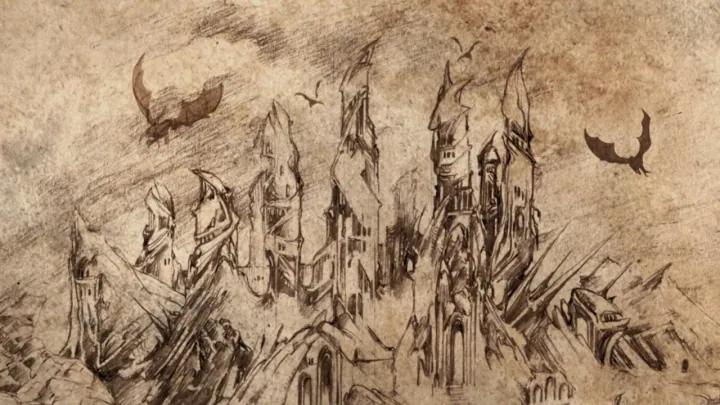
Valyria, image 2Valyria HBO.jpg · hieloyfuego.fandom.com · this wiki publishes under CC-BY-SA

