Fallen Valyrian Freehold
Feudo Franco de Valyria
The Valyrian Freehold was the greatest empire Essos ever produced: a power built by a handful of shepherds who learned to tame dragons and used them to bring half a continent to heel. Its name still stands for a kind of dominance no civilization since has matched.
A century before Aegon's Landing in Westeros, that empire collapsed into ruin, leaving behind only a scatter of daughter cities along the narrow sea and a few families prudent — or cowardly, depending on who tells it — enough to have left in time. This is the story of how Valyria rose, spread, and vanished.
Chapter 1
The fire under the Fourteen Flames
Books only
Before it was an empire, Valyria was little more than a handful of shepherds on a forgotten peninsula of Essos. Everything changed when they found dragons living among the craters of the Fourteen Flames, a chain of volcanoes that spat fire day after day. They learned to tame them, to breed them, to turn them into weapons.
With that weapon they built a city no other people on the continent could match: towers wrapped in flowers rising toward the sky, stone sphinxes with garnet eyes watching over the streets, smiths who forged with spellcraft a steel of an edge and strength no one has ever fully reproduced since. That city was called Valyria, and it gave its name to the whole Freehold.
The dragonlords believed in no god in particular; they looked down on priests and temples as things for simple folk, and for that very reason tolerated any cult that came along — dividing their subjects among a hundred different religions was safer than letting them unite under one.
Chapter 2
Salt in the fields of Ghis
Books only
For centuries, the power that ruled Essos wasn't Valyria but the Old Empire of Ghis. The Ghiscari watched the shepherds-turned-dragonlords grow and tried to crush them before it was too late: they declared war five times. Five times they lost.
In the last of those wars, the Valyrians weren't satisfied with winning: they marched on Old Ghis itself, the Ghiscari capital, and left nothing standing, not even the fields, which they covered in salt, sulfur, and skulls. The Old Empire stopped existing that afternoon, and its colonies around Slaver's Bay passed into Valyrian hands.
From that war the Valyrians also learned slavery from the Ghiscari and turned it into the engine of their own empire. Thousands of slaves taken in every conquest were sent to mine gold and silver beneath the Fourteen Flames; when they rose up, their masters' sorcery was enough to put them down. No one has ever counted how many died down there.
Chapter 3
The empire of the dragon roads
Books only
For a long time, Valyria lived at peace with the Rhoynar of the river Rhoyne, west of its peninsula. That peace broke when the Valyrians crossed the river from their colony of Volantis and marched against the Andals of Andalos; rather than submit to Valyrian slavery, the Andals chose to cross the entire narrow sea and look for new land in Westeros. Those who stayed were conquered, and their land became a Valyrian colony.
The Free Cities grew out of those colonies. Volantis and Tyrosh began as military outposts; Myr and Pentos were raised by merchants on Andal soil; the dragonlords kept Lys for themselves as a pleasure retreat; Lorath, Norvos, and Qohor were founded by people fleeing something, usually religious. Braavos was the exception: it was founded by slaves who had escaped a Valyrian slaving fleet, and that hidden city never recognized Valyria as its master.
At its height the Freehold reached as far as the Bones, and its countless cities and colonies — from Astapor and Meereen, inherited from Ghis, to the ruined Rhoynar cities along the Rhoyne — were linked by roads people rightly called dragon roads.
Those roads, and most of what they built, weren't cut with chisels: Valyrian mages, it's said, worked stone the way a potter works clay, melting it with fire and spellcraft. That is how they raised walls, bridges, and towers still standing long after the secret was lost. The dragons themselves were ruled with whips, horns, and that same sorcery.
Chapter 4
The war that emptied the Rhoyne
950 BC – 700 BCBooks only
Between 950 and 700 BC, Valyria fought a war against the Rhoynar city-states that would be told for generations. It was decided in the Second Spice War, when the Valyrian colony of Volantis set out to finish off the old Rhoyne civilization once and for all.
Prince Garin the Great gathered an army of two hundred and fifty thousand men and, at Selhorys, Valysar, and Volon Therys, did what no one else managed: he defeated the Valyrians in open battle and killed two of their dragons.
The Valyrian answer was disproportionate even by their own standards: three hundred dragons fell on the Rhoynar armies and burned them whole, Garin included. Princess Nymeria of Ny Sar gathered what Rhoynar still lived and led them out of Essos in ten thousand ships, bound for Dorne. That those ships were mostly women and children says, better than any chronicle, how many men had stayed behind on the Rhoyne.
Chapter 5
Those who left in time
114 BCBooks only
About two centuries before Valyria fell, the Freehold set foot in Westeros with barely any resistance: it colonized the island of Dragonstone, in the narrow sea, against lords of Blackwater Bay who couldn't stop it. For a long time it was the westernmost outpost of the empire.
In the year 114 before the Conquest, Daenys, daughter of Aenar Targaryen, had a vision: Valyria would be destroyed. Her family listened and moved entirely to Dragonstone. The other dragonlords called it cowardice; the Targaryens preferred to call it prudence, and they were the only ones who lived long enough to find out which word was right.
They didn't arrive alone, or to an empty place. Nearby, at Driftmark, House Velaryon, another minor Valyrian family, had already settled; Claw Isle, a little further north, belonged to the Celtigars. Between the three of them, they would hold that corner of the narrow sea for generations.
Chapter 6
The day Valyria went under
Books only
A hundred years, more or less, before Aegon landed in Westeros, something tore Valyria apart in a single afternoon. The city was destroyed completely, and the Freehold — the whole empire that had taken thousands of years to build — dissolved with no one left to rule it.
A three-hundred-foot wave struck the Isle of Cedars and wiped out every city on it. Around the capital, the land split into dozens of small islands separated by a sea that hadn't existed the day before: the Smoking Sea.
People still say the region is "haunted by demons," and almost no one risks crossing it. Those who have all say the same thing: that the Doom never really ended there.
Chapter 7
What survived Valyria
Books and show
What Valyria left behind, above all, were its daughters. The Free Cities that had survived the Doom became nations of their own, mixed their blood with half of Essos, and even now some dialect of High Valyrian can still be heard in their streets.
Dragonstone survived too, with the Targaryens and their people safe on the far side of the narrow sea. With three dragons they conquered the Seven Kingdoms, and once settled in Westeros they kept doing what Valyrian nobility had always done to keep their blood from thinning: marrying their own siblings.
What didn't survive were the secrets. Valyrian steel weapons are still as sharp as ever, but no one alive knows how to forge them anymore: that knowledge was lost with the Doom. In Westeros, alongside the Targaryens, the Velaryons and the Celtigars, two lesser Valyrian houses, stayed on controlling trade around Dragonstone — and they're still there.
The physical world
Los valyrios más nobles eran considerados de una belleza sorprendente, algunos dicen que inhumana.
Culture · Festín de Cuervos, Capítulo 21, La Hacedora de Reinas.
Las Carreteras Valyrias, conocidos como caminos del dragón, aún existen como monumentos a su trabajo, al igual que el castillo de Rocadragón, la Muralla Negra y el Puente Largo de Volantis.
Architecture · Juego de Tronos, Capítulo 23, Daenerys.
Gallery
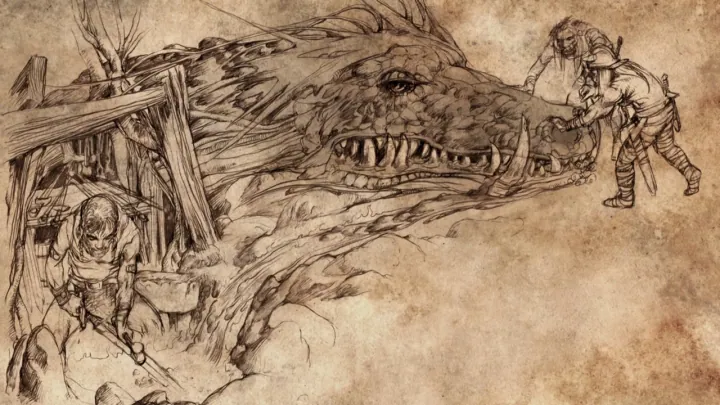
Fallen Valyrian Freehold, image 1Valyrios doman a los dragones HBO.jpg · hieloyfuego.fandom.com · this wiki publishes under CC-BY-SA 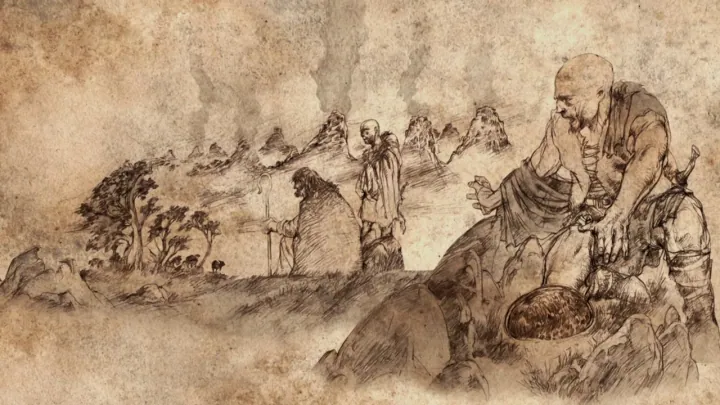
Fallen Valyrian Freehold, image 2Valyrios encuentran dragones HBO.jpg · hieloyfuego.fandom.com · this wiki publishes under CC-BY-SA

