Baelor I Targaryen
Baelor Targaryen, son of King Aegon III and Queen Daenaera Velaryon, took the crown of the Seven Kingdoms while still barely more than a boy, and the smallfolk came to call him the Blessed and the Beloved. No one before him had ruled Westeros wearing, alongside the crown, the robes of a septon.
His reign is remembered for putting devotion ahead of everything else: pilgrimages, fasts, alms, and a temple that still bears his name in King's Landing. To some he was the most pious king ever to sit the Iron Throne; to others, a fanatic whose faith came to outweigh his crown.
Chapter 1
A wife dressed in white
160 ACBooks only
Before he was king, Baelor married his younger sister, Princess Daena, in the year 160. The marriage was never consummated: he refused, again and again, giving no reason beyond his faith.
Daena answered with a calculated move. She usually wore black, and had sworn not to change her dress until she was properly bedded as a wife; so she switched to white, hoping shame would push Baelor into the marriage bed. The gamble backfired: her brother liked the white on her, said it made her look purer, and the marriage stayed unconsummated.
Chapter 2
The barefoot king
161 ACBooks only
Daeron died and the crown passed to Baelor at just seventeen. He inherited a war in Dorne as well, lit by the betrayal that had cost the previous king his life. The Hand of the King, Prince Viserys, had ordered the highborn Dornish hostages thrown into the dungeons to await execution.
Baelor freed them all and offered to escort them back to Dorne himself, as a gesture of peace. The prisoners rode; the king walked barefoot, out of devotion.
At Wyl he found his cousin Aemon, held naked in a cage in the open air. Lord Wyl wouldn't release him without the Prince of Dorne's word, so Baelor kept walking, alone and barefoot, all the way to Sunspear. He reached the edge of his strength, but the Prince of Dorne welcomed him with hospitality and nursed him back to health. That, they say, was the first miracle of his reign.
There he sealed the peace as well: he promised his nephew Daeron in marriage to Princess Myriah Martell, both of them still children, for whenever they came of age. With the war ended and Aemon's freedom agreed, Baelor turned down the galley offered for his return and set out on foot again, back toward Wyl.
Chapter 3
The pit of snakes
From 161 ACBooks only
Lord Wyl, now bound to free Prince Aemon, dug a ditch around the cage and filled it with snakes. Only by crossing it, he said, could the cage be opened. Aemon begged Baelor to seek help in the Dornish Marches instead, but the king smiled, said the gods would protect him, and jumped in.
Singers claim the snakes bowed their heads as he passed. Other accounts say they bit him repeatedly, anywhere from a dozen to fifty times depending on who tells it, before he reached the cage. He still handed the key to his cousin, and Aemon walked free.
On the way back it was Aemon, still naked, who carried an unconscious Baelor. They crossed the Dornish mountains to a village where a septon gave them clothes and a donkey, then reached Dondarrion land at Blackhaven, where a maester tended the king before moving him on to Storm's End. There he finally woke. It took more than half a year before he had the strength to travel back to the capital.
Chapter 4
The septon king
Books only
Back in the capital, Baelor convinced the High Septon to annul his marriage to Daena and shut her away, along with their sisters Rhaena and Elaena, in the Maidenvault, far from temptation. He tried to hatch dragon eggs through prayer; nothing happened. He chose not to revive the Faith Militant: for him, prayer was the only weapon a king needed.
He outlawed prostitution in King's Landing, driving more than a thousand women and their children outside the walls, deaf to the protests and the riots that followed. He emptied the treasury on charity, gave out bread for a full year, and began raising, on Visenya's Hill, the sept he had seen in a vision — the one that still carries his name.
His choices unsettled his lords more and more. He forced the proud Lord Belgrave to wash a leper's feet. He tried, and failed, to replace message ravens with doves. He granted tax exemptions to lords who fitted their daughters with chastity belts, and burned books he judged impious, among them the Testimony of Mushroom and Septon Barth's Unnatural History. Some began to wonder whether the venom of the Dornish snakes had touched his mind.
When the High Septon died, Baelor replaced him with an illiterate stonemason who, he believed, carved stone like the Smith reborn; the man died of fever within a year. After that he named an eight-year-old boy High Septon, convinced the child worked miracles.
Chapter 5
The last fast
161–171 ACBooks only
In 161, his cousin Princess Naerys gave birth to twins who did not live. Baelor fasted for a full moon's turn and sent his cousin, Prince Aegon, on a diplomatic mission to Braavos, to make sure Naerys was left alone.
Nine years later, in 170, Daena, his sister and former wife, bore a bastard son. Baelor answered with a forty-day fast, taking nothing but water and a little bread. On the forty-first day, in 171, he collapsed before the altar of the Mother. Neither Grand Maester Munkun nor the boy High Septon could save him.
Some say he starved himself to purify himself of another's lust. Others hold that his own Hand, his uncle Viserys, poisoned him — some say for the throne, others say for the realm's sake, fearing the religious crusade Baelor had in mind would have set the crown against the North and the Iron Islands. The record doesn't settle which version is true.
Gallery
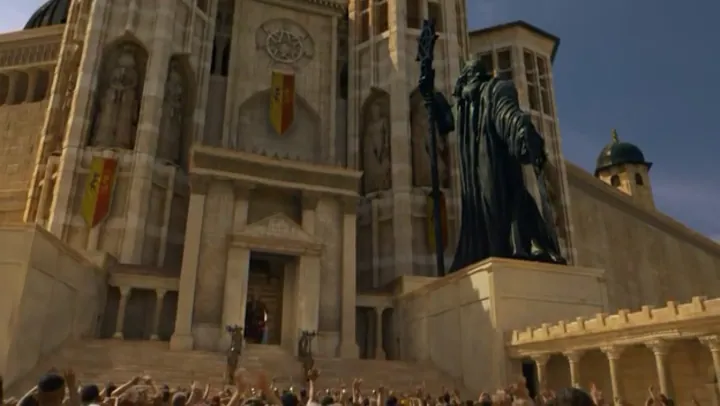
Baelor I Targaryen, image 2GreatSeptS3.jpg · gameofthrones.fandom.com · this wiki publishes under CC-BY-SA 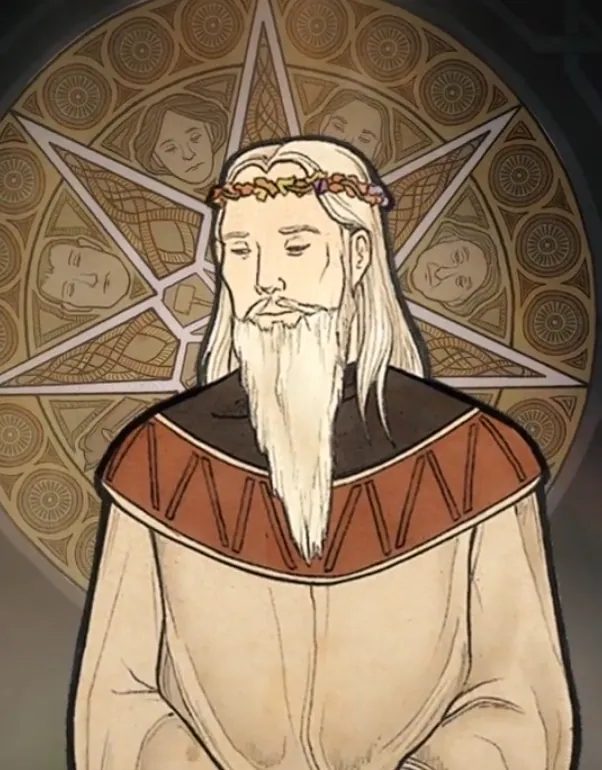
Baelor I Targaryen, image 3Baelor the Blessed.png · gameofthrones.fandom.com · this wiki publishes under CC-BY-SA
Family tree
House Targaryen of King's Landing

- Visenya Targaryen
- Aegon I Targaryen
- Rhaenys Targaryen
- Aenys I Targaryen
- Maegor I Targaryen
- Rhaena Targaryen
- Aegon Targaryen
- Viserys Targaryen
- Jaehaerys I Targaryen
- Alysanne Targaryen
- Vaella Targaryen
- Aerea Targaryen
- Rhaella Targaryen
- Tyanna of the Tower
- Aegon Targaryen
- Daenerys Targaryen
- Aemon Targaryen
- Baelon Targaryen
- Alyssa Targaryen
- Maegelle Targaryen
- Vaegon Targaryen
- Daella Targaryen
- Saera Targaryen
- Viserra Targaryen
- Gaemon Targaryen
- Rhaenys Targaryen
- Valerion Targaryen
- Viserys I Targaryen
- Gael Targaryen
- Daemon Targaryen
- Aegon Targaryen
- Rhaenyra Targaryen
- Baelon Targaryen
- Aegon II Targaryen
- Helaena Targaryen
- Aemond Targaryen
- Daeron Targaryen
- Jacaerys Velaryon
- Lucerys Velaryon
- Rhea Royce
- Baela Targaryen
- Rhaena Targaryen
- Joffrey Velaryon
- Aegon III Targaryen
- Viserys II Targaryen
- Jaehaera Targaryen
- Jaehaerys Targaryen
- Baelor I Targaryen
- and 66 more in the index


